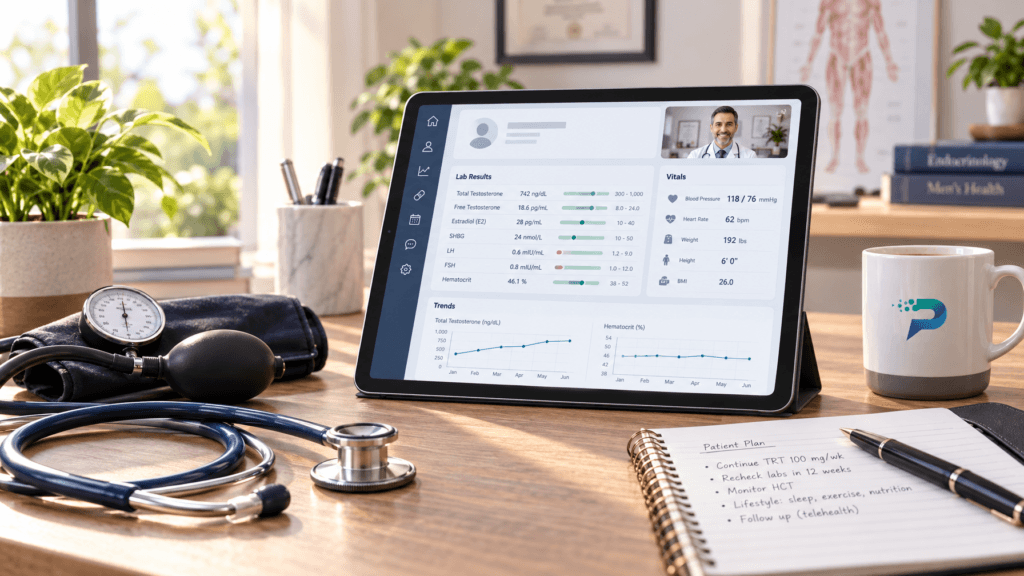

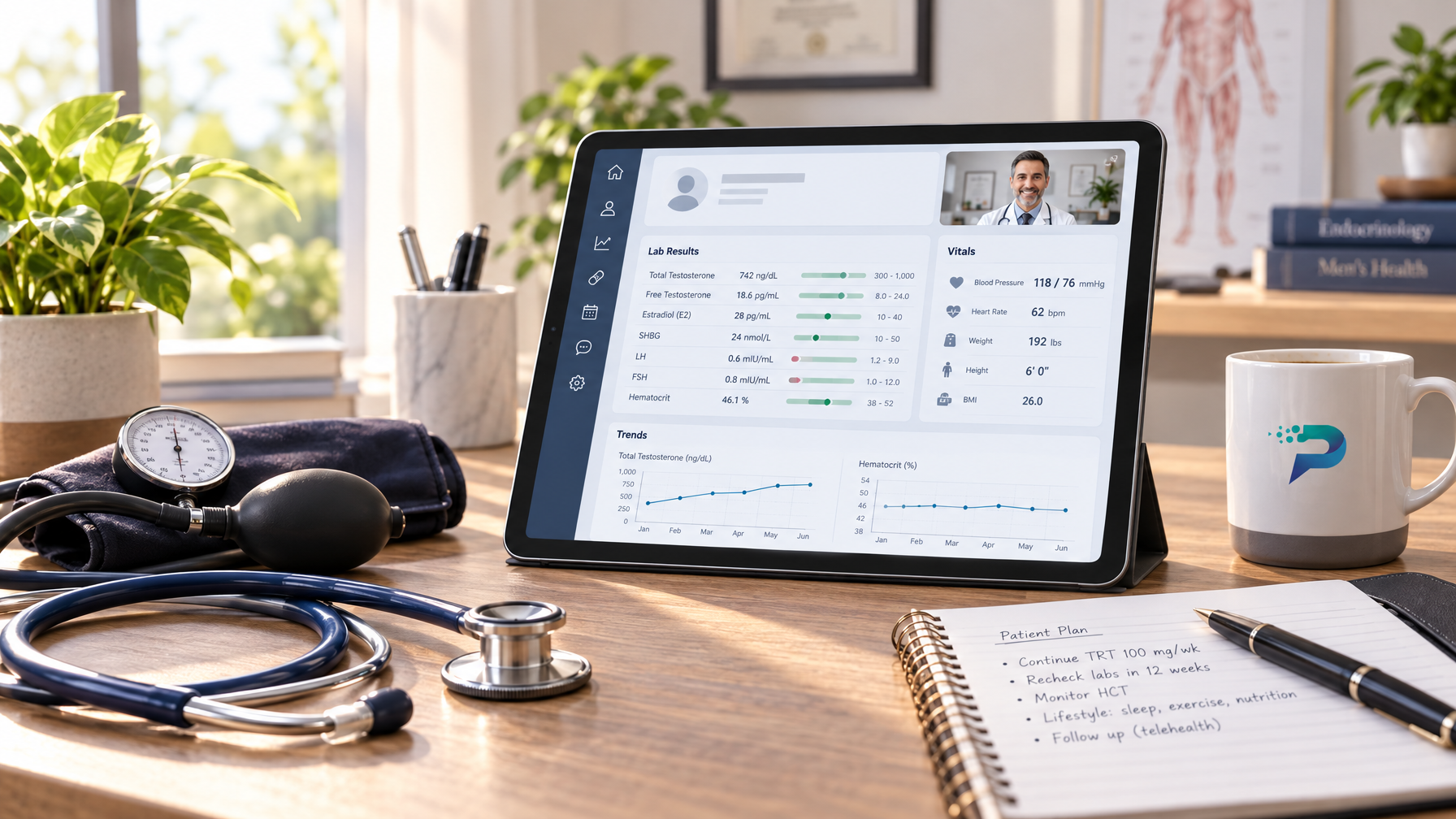
TLDR: Finding a legitimate TRT doctor through telehealth requires more than a 2-minute questionnaire. Clinical guidelines from the American Urological Association require documented symptoms alongside two separate morning fasting blood tests showing total testosterone below 300 ng/dL. A responsible virtual clinic evaluates free testosterone, PSA, hematocrit, estradiol, and metabolic markers before prescribing. Profusions provides physician-led testosterone replacement therapy (TRT), comprehensive biomarker reviews, and pharmacy fulfillment from accredited U.S. partner pharmacies across 48 states.
Fatigue that coffee cannot fix, fading strength in the gym, brain fog during afternoon meetings, and diminished libido often prompt men to look for a qualified TRT doctor. Telehealth has made expert hormone care widely accessible, removing the friction of waiting rooms and busy local clinics. However, virtual care models vary widely in clinical rigor.
Some platforms act as pill mills, approving prescriptions after a quick online quiz. Others operate as legitimate virtual medical practices, combining rigorous diagnostics, state-licensed clinician reviews, and ongoing health monitoring. This clinical guide outlines what an evaluation by a reputable TRT doctor entails, which lab biomarkers are mandatory, and how to verify telehealth safety.
What Diagnostic Standards Define a Legitimate TRT Doctor?
Testosterone replacement therapy is not a cosmetic supplement or a casual lifestyle booster. It is medical hormone optimization that directly influences cardiovascular health, red blood cell production, fertility, and metabolic function. A legitimate TRT doctor evaluates your baseline health through established diagnostic protocols before recommending treatment.
According to the clinical practice guidelines published by the American Urological Association (AUA), a diagnosis of testosterone deficiency requires two key elements:
- Documented clinical symptoms of hypogonadism (low energy, diminished libido, reduced muscle mass, mood changes, erectile dysfunction, or sleep disturbances).
- At least two separate morning fasting blood draws demonstrating total testosterone levels below 300 ng/dL.
Testosterone levels peak between 7:00 AM and 10:00 AM in healthy adult males. Testing in the afternoon or relying on a single snapshot can yield misleading results. If an online provider offers to prescribe testosterone without requiring verified morning blood work, that is an immediate safety concern.
Comprehensive Lab Work: What Your Blood Panel Must Include
A superficial provider checks only total testosterone. A thorough TRT doctor evaluates a broad panel of endocrine, hematologic, and metabolic markers to understand why your levels are low and whether treatment is clinically safe.
Your comprehensive intake lab panel must cover:
- Total and Free Testosterone: Total testosterone measures all circulating hormone, while free testosterone measures the unbound, bioavailable portion active at cellular receptors.
- Sex Hormone-Binding Globulin (SHBG): Elevated SHBG binds testosterone, leaving less free hormone available to tissues even if total levels appear borderline normal.
- Estradiol (Sensitive Assay): Testosterone naturally aromatizes into estrogen. Monitoring estradiol helps prevent side effects such as gynecomastia, mood volatility, and fluid retention.
- Complete Blood Count (CBC) with Hematocrit: Exogenous testosterone stimulates red blood cell production. Baseline hematocrit must be verified to prevent polycythemia (thickened blood), which increases cardiovascular strain.
- Prostate-Specific Antigen (PSA): PSA screening establishes baseline prostate health prior to beginning androgen therapy.
- Comprehensive Metabolic Panel (CMP) and Lipid Panel: Evaluates baseline liver enzymes, kidney function, blood glucose, and cholesterol.
- Luteinizing Hormone (LH) and Follicle-Stimulating Hormone (FSH): Differentiates between primary hypogonadism (testicular origin) and secondary hypogonadism (pituitary or hypothalamic signaling issues).
Ongoing safety requires repeat testing at 8 to 12 weeks after initiating therapy, followed by semiannual monitoring once your hormone levels stabilize.
Evaluating Delivery Methods and Integrative Wellness Protocols
Every patient responds differently to hormone therapies. A clinical TRT doctor reviews your medical history, daily lifestyle, and personal goals to select the most effective delivery method:
- Intramuscular or Subcutaneous Injections: Typically administered once or twice weekly to maintain stable serum levels and minimize peaks and troughs.
- Topical Creams or Gels: Applied daily to the skin, offering consistent daily absorption without needles.
- Supportive Therapies for Fertility Preservation: Clinicians often discuss adjunctive protocols like enclomiphene or hCG for men wishing to maintain testicular function and spermatogenesis while optimizing androgen levels.
Hormone optimization also works in synergy with broader metabolic health. Many patients combine TRT with complementary clinical programs:
- Metabolic Support and GLP-1 Therapy: For men carrying visceral adiposity that drives insulin resistance and aromatization, medical weight management with semaglutide or compounded tirzepatide can restore metabolic balance.
- Growth Hormone Secretagogues: Peptides like sermorelin stimulate natural growth hormone pulses, supporting deep slow-wave sleep, muscle recovery, and cellular repair.
- Cellular Longevity: Subcutaneous NAD+ therapy supports mitochondrial resilience and cellular energy production.
- Sexual Wellness: Targeted options such as prescription tadalafil or PT-141 address blood flow and central arousal pathways.
How Virtual TRT Consultations Work at Profusions
Profusions eliminates the inconvenience of traveling to specialized hormone clinics while upholding strict medical standards:
- Secure Digital Intake: Complete a detailed online health history and symptom assessment in about 5 minutes.
- Diagnostic Lab Order: Complete your fasting morning lab panel at an accredited local patient service center near you (such as Quest Diagnostics or Labcorp).
- Licensed Telehealth Evaluation: Review your comprehensive lab markers one-on-one with a licensed healthcare provider in your state. Your clinician discusses symptom relief, titration protocols, and potential contraindications.
- Discreet Home Delivery: If prescribed, your custom treatment protocol ships directly to your doorstep in discreet packaging from an FDA-registered, state-licensed 503A partner pharmacy.
- Proactive Monitoring: Stay connected with your clinical care team via secure messaging, with scheduled follow-up labs to adjust dosing as your body responds.
Take Control of Your Hormonal Health Today
Low testosterone is a treatable medical condition. Partnering with a dedicated TRT doctor ensures your protocol is safe, medically sound, and tailored to your physiology.
Ready to evaluate your hormone levels with a licensed clinician? Start your confidential consultation today at https://www.myprofusions.com/get-started/.
Profusions Health and Wellness is a virtual telehealth clinic serving patients in 48 states and Washington, D.C. Prescriptions are issued following review of your diagnostic lab results and health history by a licensed healthcare provider. Compounded medications are prepared by state-licensed pharmacies and are not FDA-approved finished products. This content is for educational purposes and does not constitute formal medical advice.